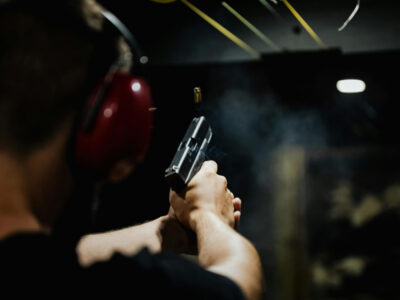
When it comes to self-defense, it’s important to understand that it’s not about aggression, but about your own safety. In today’s world, where unpredictable situations can arise anywhere, many are forced to consider available ways to protect themselves and their loved ones. It’s important to remember, however, that protection must remain within the law.
There are many legal self-defense weapons available that allow you to effectively respond to a threat without violating Ukrainian law. The modern market offers options that perfectly suit your lifestyle, level of training, and personal preferences.
In this article, we’ve compiled a list of the top 10 legal self-defense weapons. Let’s look at the legal regulations you should consider before purchasing a weapon, what weapons you can carry for self-defense, and how to avoid mistakes when using them.
Self-Defense Legislation: What You Need to Know Before Buying
Ukrainian legislation on self-defense and weapons ownership in Ukraine has been adapted to martial law in 2026. It’s important to note several key aspects to consider before purchasing:
The right to self-defense is enshrined in Article 36 of the Criminal Code of Ukraine. According to this article, a person has an absolute right to self-defense, regardless of whether they can escape or call for help. It is further noted that self-defense must be proportionate to the attack.
In cases where an attack is committed by a group of individuals, an armed individual, or during an attempt to break into a home, the law permits the use of any means, including those that could result in the death of the attacker(s), but without exceeding the limits of necessary self-defense.
Before using self-defense, it is advisable to warn the attacker. In cases where a legal weapon for self-defense is used, the victim should call the police and an ambulance.
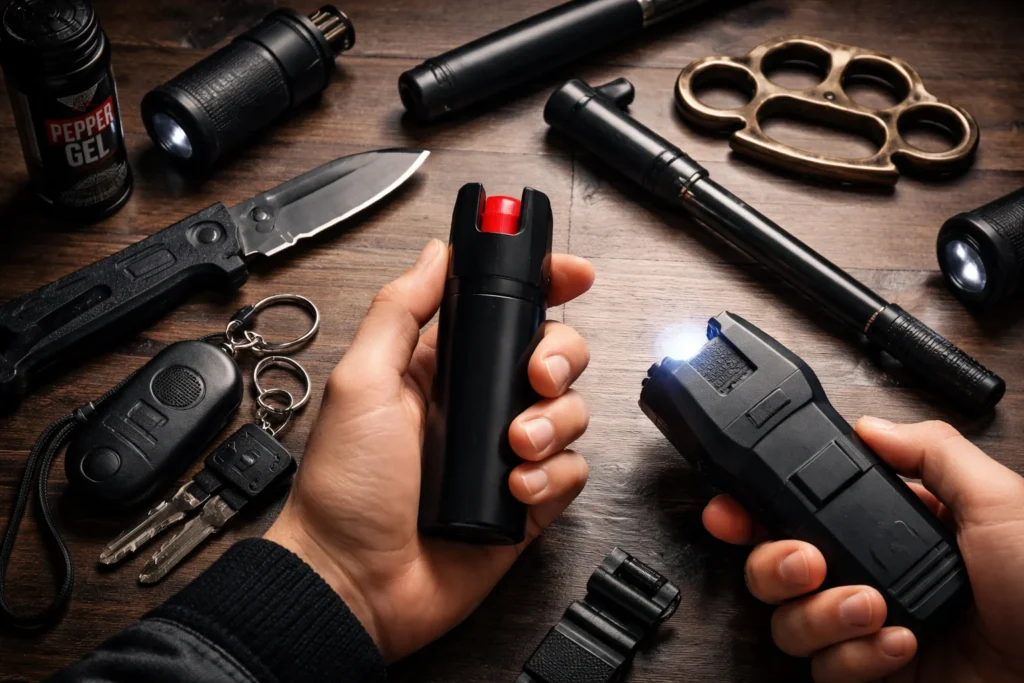
According to current regulations, without a permit, those aged 18 and over may purchase and carry the following: gas (pepper) spray, air pistols and rifles up to 4.5 mm in caliber, stun guns, and rubber batons.
A self-defense weapon permit, a medical certificate, and training in the rules of use are required for gas pistols and revolvers, traumatic weapons, and smoothbore hunting weapons.
Carrying unmarked gas pistols or homemade self-defense weapons is prohibited. In addition, the law provides for liability for using weapons while intoxicated.
According to Article 263 of the Criminal Code, illegal use of firearms, except for smoothbore hunting guns, carries a prison sentence of 3 to 7 years.
Violating the rules for purchasing, storing, carrying, and transporting hunting weapons and certain types of airguns is punishable by fines.
TOP 10 Legal Means of Self-Defense in Ukraine
The list of popular and legal means of self-defense without a permit includes:
Starter and flare pistols;
Gas canisters;
Airguns;
Revolvers Flaubert;
tactical pens;
household knives;
stun guns;
traumatic weapons;
smoothbore weapons;
rifled carbines and AR-15/AK platforms.
Next, we’ll examine in detail all the advantages and features of using the listed permitted weapons for self-defense in Ukraine.
1. Gas sprays: the most affordable option
Gas sprays (jet and aerosol) with tear gas and irritant properties are perhaps one of the most affordable self-defense weapons. They can be purchased by Ukrainian civilians without any restrictions after reaching the age of 18. The exception is the “M” brand. and “C”, such as “Teren-4M”, “Cobra-1C”, as well as those types of canisters that contain nerve agent components.
Among the advantages of gas canisters are:
small size;
reasonable cost;
a fairly high stopping effect, as well as the impossibility of causing any long-term or irreparable injury to an attacker or aggressive animal.
The working range is Approximately 3-5 meters.
Among the disadvantages:
Little psychological stopping effect;
Limited range;
Inability to use the device in any confined space (elevator, vehicle, small room).
2. Airguns up to 4.5 mm caliber
Air pistols with a caliber of less than 4.5 mm or with a muzzle energy of less than 7.5 joules are considered legal self-defense weapons and can be purchased without a license. Airguns can essentially be considered high-quality replicas of firearms, available for purchase in Ukraine. However, they should not be considered the most effective means of self-defense. Among the advantages of airguns up to 4.5 mm:
no purchase license requirement;
relatively low risk of causing serious injury to the target.
Disadvantages:
low physical and psychological stopping effect;
no noise.
3. Revolvers chambered for the Flobert cartridge
Revolvers chambered for the Flobert cartridge can be legally purchased in Ukraine from the age of 18.
Advantages of Flobert revolvers for self-defense:
reasonably long range;
good noise effect;
the similarity to a firearm allows for psychological influence on an attacker, thereby suppressing aggression.
As for the obvious disadvantages, the main ones are the low muzzle energy and stopping power compared to traumatic weapons. As a result, a Flobert revolver can cause pain or injury, but it will not quickly stop an aggressive or motivated attacker. can.
4. Starter and Signal Pistols
Starter or signal (noise) pistols are so-called “scarecrows” that fire blank 9mm cartridges. They are legal self-defense weapons and do not require a license. Their main feature is a muffled barrel; otherwise, the weapon is a complete replica of a real pistol. They are used as a means of self-defense, creating a noise and psychological stopping effect.
Advantages of starting pistols for self-defense:
noticeable psychological stopping factor;
allows you to fire a warning shot upward;
noise factor that attracts attention and scares away animals;
relatively small dimensions;
a device that allows you to learn the rules of using a weapon;
as a good gift;
reasonable cost (cheaper than a Flobert pistol, a traumatic pistol, and an air gun).
The main disadvantage is Lack of real stopping power. However, this is also a plus, since if there is no physical injury, there will be no legal problems later.
5. Tactical Pens and Impact Weapons
A tactical pen, or kubotan, is not considered a weapon and can be used by civilians.
It is a small stick 10-15 cm long, resembling a writing pen or keychain. It has a body made of aircraft-grade aluminum and can be used for self-defense as well as in emergency situations, such as breaking glass.
The birthplace of the kubotan is considered to be Japan, where it was used in martial arts to strengthen strikes and fighting techniques.
Advantages of a tactical pen:
It is not a weapon per se and is completely legal;
Compactness – can be worn as a keychain, in a purse, or pocket;
When used correctly, it allows you to deliver powerful blows to pressure points and nerve plexuses;
Suitable for both men and women;
A disadvantage of the kubotan – Limited range, meaning they can only be used at close range, requiring skills in close combat.
Expandable batons and baseball bats are also considered striking weapons for self-defense.
Expandable batons are among the most popular weapons among civilians in Ukraine. It’s worth noting that their use is associated with certain risks. Police may classify them as special equipment and bladed weapons, potentially resulting in prosecution under the Criminal Code for illegal handling of weapons. The advantage of this self-defense tool is its high effectiveness due to its high striking force and small size.
Baseball bats are sporting equipment, meaning they are not considered bladed weapons and do not require a permit to purchase or carry. However, if a bat was used to cause injury to a person, the situation will be considered legally and will lead to a criminal investigation.
A baseball bat has high striking and deterrent effects. However, it is not always possible to quickly retrieve it, for example, from the trunk. Storing it nearby, in the car, may raise questions and suspicions from the police.
6. Household Knives
Household and utility knives are not considered bladed weapons, meaning they can be carried freely as a means of self-defense.
Advantages of knives:
small size;
ease of use at home or outdoors;
wide selection at various prices;
make a good gift.
However, knives have many disadvantages compared to other self-defense weapons:
short range;
self-defense skills are required for effective use;
limited psychological effect;
unpredictable consequences from use – from extremely serious to irreparable.
7. Tasers: Legal Nuances of Use
Tasers, as a means of non-lethal self-defense, can be purchased and used without any restrictions with a manufacturer’s certificate. Restrictions on use are: When intoxicated, against the police, and at rallies.
They act upon contact with the body, blocking muscles, thereby stopping the attacker.
Pros:
They are not capable of causing serious injury;
Weather conditions do not affect their effectiveness;
Suitable for repelling dogs and other animals.
Cons:
Regular monitoring of battery level;
Close contact with the attacker is essential for effective use;
They are more expensive than, for example, a gas-powered Spray can.
8. Traumatic Weapons: Who is Granted a Permit?
Traumatic weapons are among the most effective means of self-defense, but they are not freely sold to civilians in Ukraine. To purchase, store, and carry a traumatic weapon, you must obtain a special permit and have no criminal record or medical contraindications. Permits can only be issued to certain categories of citizens (members of law enforcement, security, and military agencies, members of parliament and their assistants, court employees, and members of public organizations) who are at least 21 years old and have completed training.
9. Shotguns: The Best Home Defense?
Smoothbore weapons are one of the most effective legal weapons for home self-defense, as they have a high stopping power. Obtaining a permit, for example, for a pump-action or semi-automatic weapon is relatively easy.
Legal aspects of using smoothbore weapons:
A permit is required, and you must be 21 years of age or older.
Before obtaining a permit, you will need to learn how to handle a weapon and, preferably, take a shooting course. A medical certificate and a certificate of good conduct are also required. Weapons may only be stored in a special safe or cabinet.
Self-defense with firearms is strictly regulated. Weapons may only be stored unloaded in a safe and may be used by the owner to defend their home from an armed attack or a group intrusion.
10. AR-15/AK Rifles and Carbines
AR-15/AK rifles and carbines are among the most popular rifles in the world, used by both law enforcement and civilians. They have a modular design, are lightweight and accurate, and are versatile for sports, hunting, and self-defense.
They are highly effective and have a deterrent psychological effect.
What to Choose for Self-Defense: A Comparison Table
Name
Do I Need a License?
Range
Pros
Cons
Gas Spray can
No
3-5 m
Compact, inexpensive, easy to use, safer for the attacker
Limited range, weak psychological effect, cannot be used in confined spaces
Airgun (up to 4.5 mm)
No
Up to 10 m
Available, low risk of serious injury
Weak stopping power, Almost no psychological effect
Strict permit requirements, high risk of consequences
Major mistakes when using self-defense weapons
The main mistakes when using self-defense weapons can be roughly divided into legal, technical (tactical), and psychological.
Legal mistakes:
Misuse, for example, when life is not in danger or the weapon is used against unarmed people.
Violation of self-defense objectives (shooting/wounding the head or vital organs) may be considered intentional infliction of serious injury.
Lack of a license, failure to comply with storage and transportation rules.
Technical and tactical errors in the use of self-defense weapons:
Inaccessibility of the weapon when it is stored in an improperly selected place, which means it cannot be used in the event of a real danger.
Lack of training, for example, in handling and shooting a weapon, is fraught with the risk of inability to quickly draw, release the safety, fear of the shot, recoil, and accurate aiming at an attacker under The influence of emotions.
Choosing the wrong weapon for your goals and parameters.
As for psychological errors, here we are mainly talking about a lack of readiness to use force, when a weapon is shown with the aim of intimidating an attacker, but as a result, the attacker has time to collect himself or even take away the means of protection.
Why having a gun does not replace shooting skills
A legal weapon for self-defense is just a tool that, without the skills to handle it, can become useless and even dangerous, that is, in fact, it can work against you in a critical situation. Having a gun does not replace shooting skills for several key reasons:
Stress and muscle memory. If you haven’t learned to shoot well, this will manifest itself in an emergency by hand tremors and erratic actions. Shooting training allows you to automatically perform the necessary actions—draw the weapon from its case, release the safety, aim, and reload.
Active shooting. Perhaps only in the movies can shooting be static. In a real-life situation, to defend yourself from attackers, you need to move and shoot simultaneously, and this can only be learned through shooting training.
Shooting accuracy. Simply firing a shot isn’t enough; you also need to hit the target. A lack of shooting skills in a stressful situation will result in misses, which means the weapon’s effectiveness for self-defense is completely lost. Furthermore, this will not only fail to stop the criminal, but also create additional risks for others.
Weapon control. Weapons can misfire, stall, or jam. An experienced shooter can fix a malfunction, while an inexperienced one will simply panic.
Psychological readiness. Without shooting experience, pulling the trigger becomes a huge psychological stress. Training helps prepare mentally for the use of force, which means acting without hesitation.
Conclusion: Safety Begins with Training
Even the most effective and legal means of self-defense does not guarantee safety without an understanding of its principles. Any device—from pepper spray to firearms—requires not only technical skills but also an understanding of the legal consequences of its use.
Training not only allows you to act correctly and confidently in a critical situation but also avoids mistakes that could lead to injury or legal liability. It’s important to understand the limits of acceptable self-defense, be able to assess a threat, and choose an appropriate response.
Regular practice at a shooting club and learning the basic principles of personal safety significantly increase the effectiveness of any weapon for self-defense. Because, ultimately, in matters of self-defense, it’s not the mere presence of a weapon that matters, but rather your ability to make informed decisions in a critical moment.
More on this topic
05.11.2025
Active Shooting Headphones: How They Work and How to Choose the Right Model
Hearing is not just comfort, but a tool for survival. A shot at the range seems harmless until you feel a slight ringing in your ears. And if you stand near a mortar or a large-caliber rifle — even one day without protection can cost you part of your hearing. Active headphones not only suppress guns
15.03.2026
Top 10 Legal Weapons for Self-Defense
Shooting at a shooting range has long ceased to be just a pastime. Today, it's a fully-fledged way to develop concentration, discipline, and accuracy. While the choice was previously severely limited to certain gun models, more and more shooting clubs are now using popular carbine brands. These type
17.03.2026
Basic safety precautions when using firearms
Firearms are not toys. Even experienced shooters regularly remind themselves of simple but vital rules. Safety always comes first — both at the shooting range and when storing, transporting, and maintaining firearms. In this article, we will discuss the key safety precautions during shooting that ev
05.11.2025
Active Shooting Headphones: How They Work and How to Choose the Right Model
Hearing is not just comfort, but a tool for survival. A shot at the range seems harmless until you feel a slight ringing in your ears. And if you stand near a mortar or a large-caliber rifle — even one day without protection can cost you part of your hearing. Active headphones not only suppress guns
15.03.2026
Top 10 Legal Weapons for Self-Defense
Shooting at a shooting range has long ceased to be just a pastime. Today, it's a fully-fledged way to develop concentration, discipline, and accuracy. While the choice was previously severely limited to certain gun models, more and more shooting clubs are now using popular carbine brands. These type
17.03.2026
Basic safety precautions when using firearms
Firearms are not toys. Even experienced shooters regularly remind themselves of simple but vital rules. Safety always comes first — both at the shooting range and when storing, transporting, and maintaining firearms. In this article, we will discuss the key safety precautions during shooting that ev
Darwin Shooting Club— we do not sell firearms
Our club does not sell or resell firearms. We exist to teach safe, conscious, and responsible handling of firearms.We conduct training sessions, safety briefings, and promote a culture of informed firearm ownership.