Firearms are not toys. Even experienced shooters regularly remind themselves of simple but vital rules. Safety always comes first — both at the shooting range and when storing, transporting, and maintaining firearms. In this article, we will discuss the key safety precautions during shooting that everyone who handles a firearm should know.
Basic rules for safe handling of firearms
To safely use a firearm:
Follow the rules for storing weapons.
Always check that the weapon is unloaded.
Keep your finger on the trigger only when aiming.
This reduces the risk of injuries and accidental discharges.
Any carelessness with a firearm can lead to tragedy. Shooting safety is based on fundamental rules. Everyone must know and follow them, regardless of experience:
Always treat the weapon as loaded. Even if you have personally checked that it is unloaded, handle it as if there is a round in the chamber. This forms proper habits and reduces risks.
Do not point the barrel where people may be. A safe direction is toward the ground, the target, or a specially equipped area.
Keep your finger off the trigger. Until you have aimed and are ready to shoot, keep your finger along the frame, not on the trigger.
Check the weapon before shooting. Make sure the barrel is clean, the mechanism is working, and the magazine is installed correctly. Using a malfunctioning weapon is prohibited.
Listen to the instructor’s commands, follow their instructions without discussion. They are responsible for safety at the range.
At the shooting club Darwin Club, training is based on these very rules. This is the foundation for confident and safe shooting.
Behavior at the shooting range or training ground
Behavior at the shooting range is an important factor in overall safety. All actions here must be clear and predictable. Safety precautions when shooting begin long before the first shot.
Before going to the firing line, make sure you have received a briefing. If something is unclear, ask. An instructor or shooting supervisor is always present at the range. They are responsible for order and safety.
Do not take a weapon without permission. Always keep the barrel pointed in a safe direction. Maintain distance from other shooters. After each exercise, check that the weapon is unloaded.
If you see violations, report them to the instructor immediately. Safety is the shared responsibility of all participants.
Malfunctions happen even with proper use. The most important thing is not to panic.
If a misfire occurs, keep the weapon pointed in a safe direction and wait 30 seconds. This will eliminate the risk of a delayed discharge. Then carefully check the chamber without changing the direction of the barrel.
If a cartridge is jammed, do not try to pull it out by force. Set the malfunctioning weapon aside and contact the instructor. At the Darwin Club shooting range, there are always specialists nearby who will help.
Advantages of proper weapon handling
Reducing the risk of injuries and accidents
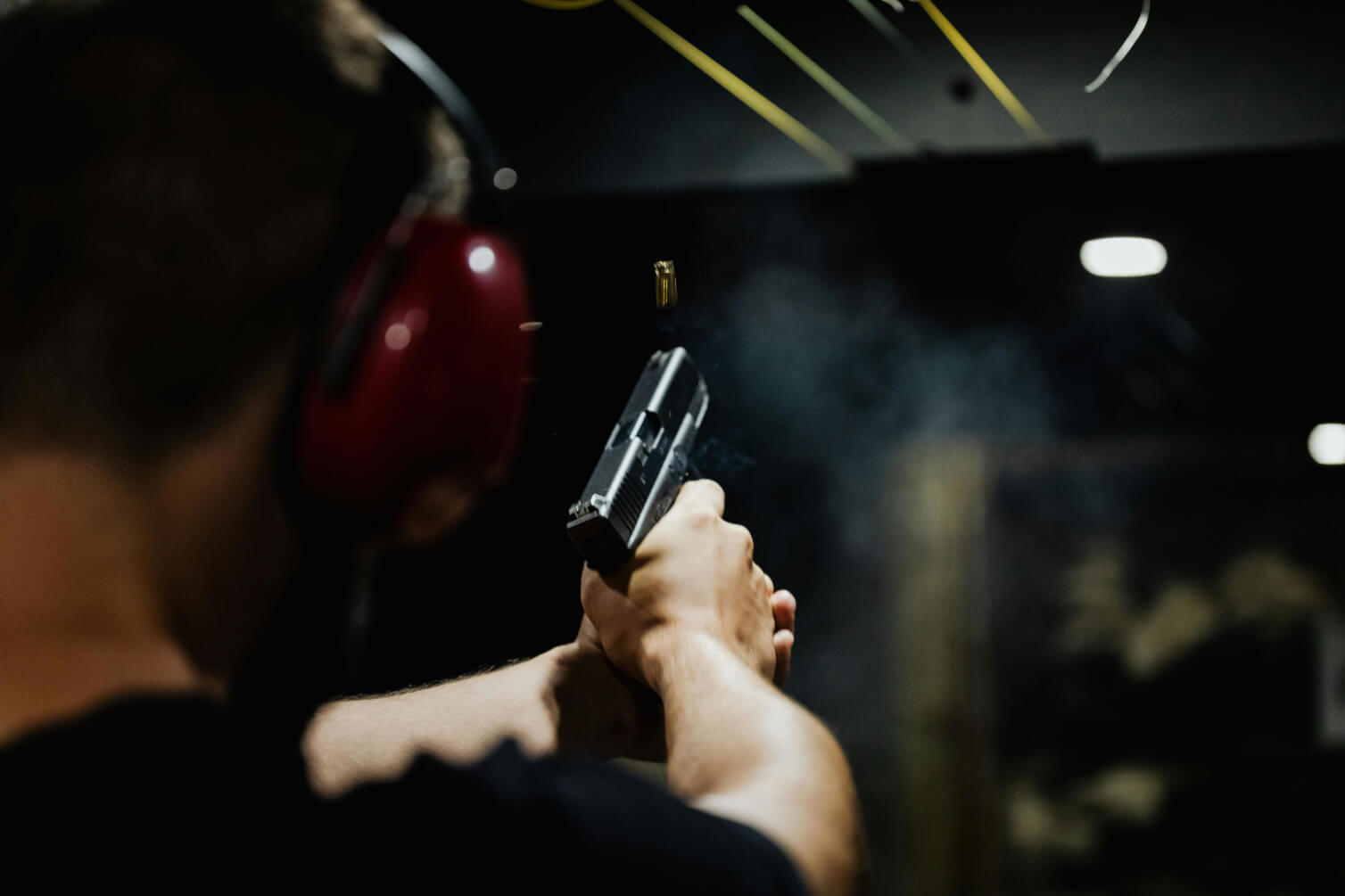
Proper grip: if you hold the weapon correctly, it reduces recoil and the risk of bullet deviation. An improper grip can lead to significant loss of control over the weapon, increasing the likelihood of accidents.
Readiness for recoil: if you are not prepared for recoil (for example, you haven’t positioned your feet correctly or aren’t holding the weapon firmly), this can lead to injuries such as sprains or pain in the wrists, shoulders, or back.
Safety technique: keeping your finger off the trigger until you are ready to shoot significantly reduces the likelihood of an accidental discharge.
Improving shooting accuracy
Proper aiming: by following proper aiming technique, you increase the accuracy of your shots. Shooting while keeping the barrel pointed in the right direction and not wasting energy on an improper grip or position significantly improves your ability to hit the target.
Steady breathing and control: focused, steady breathing without pauses and uneven movements helps maintain sight stability and produce an accurate shot.
Reducing the risk of losing weapons or ammunition
Storing weapons in a safe place: proper storage of weapons in a metal safe with a lock prevents access by unauthorized persons, reducing the likelihood of theft or unauthorized use of the weapon.
Systematic inspection: regular inspection of the weapon’s condition (no rust, dirt, or mechanical damage) helps avoid malfunctions during use.
Ensuring the safety of others
Do not point the barrel at people: if you follow the rules, do not point the weapon at people, and always keep it pointed in a safe direction, this protects not only you but also other participants in training or people nearby.
Following instructions: by following the instructor’s directions, you reduce the likelihood of accidents for both yourself and other shooters. The instructor always prioritizes safety at the range, so it is important to follow their instructions without objection.
Building trust in your responsibility
Proper handling of weapons shows your responsibility and readiness for safe use. This builds a positive image among other shooters and helps maintain order at the range. When others see that you follow all the rules, they also begin to behave more carefully.
Compliance with laws: your responsibility for weapons includes not only safe handling but also compliance with all laws and regulations. This helps avoid legal problems and ensures that you do not violate weapons ownership laws.
Preserving a culture of safety
Proper handling of weapons helps build a culture of safety at the shooting range and within the team. This is important for every shooter, as not only your safety but also the safety of other participants depends on it.
Shooting safety table: what to do and what to avoid
Compliance with safety precautions when shooting firearms is a top priority for every shooter, regardless of experience. Ignoring basic rules can lead to serious injuries or even death.
Remember that every time you pick up a weapon, you bear full responsibility for your actions and the safety of those around you.
Situation
What to do
Removing the weapon from its case
Check the magazine and chamber.
Preparing the weapon
Check the barrel for dirt.
Aiming the weapon at the target
Make sure the barrel is pointed in a safe direction. Assume a stable stance, keep your finger along the frame. Check accuracy, adjust the sight.
Firing
Breathe evenly, press the trigger smoothly.
Misfire
Wait 30 seconds, then check the chamber.
Cartridge jam
Set the weapon down and contact the instructor.
Weapon dropped
Check the weapon before picking it up.
End of shooting
Unload the weapon, leave it in a safe position.
Shooting in poor visibility
Make sure the target is clear and at a safe distance.
Training with other shooters
Maintain distance and line of aim.
Rules for storing firearms
Safety is not just about shooting, but also about storing firearms. The main task is to prevent access by unauthorized persons.
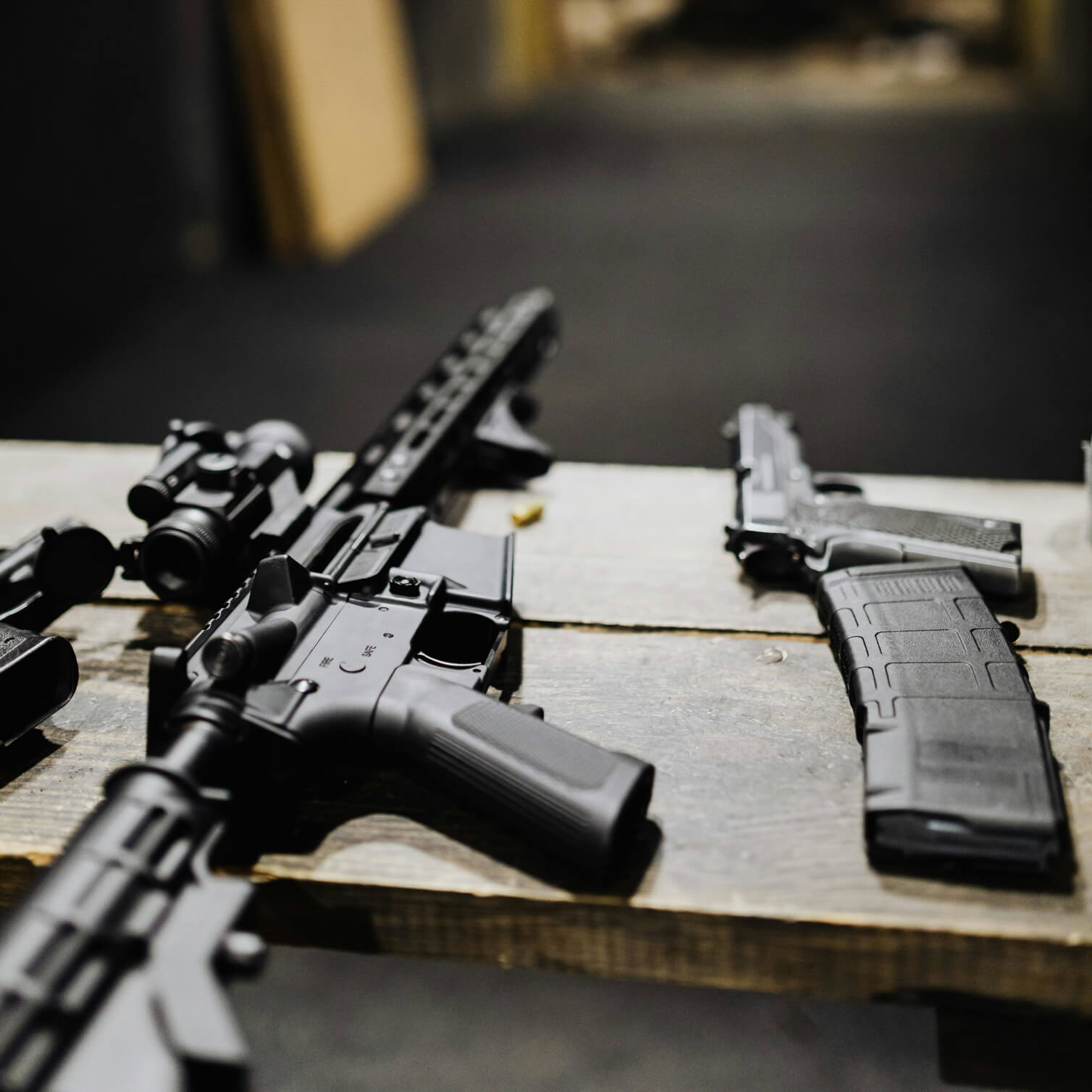
Weapons must be stored in a metal safe with a lock. It must be secured to the floor or wall. Ammunition must be stored separately, in an inaccessible place. Leaving a loaded weapon is prohibited.
Regularly check the condition of the weapon: for rust, dirt, or mechanical damage. If in doubt, consult a specialist.
Proper storage is one of the key safety measures. Even if a weapon is not in use, it remains a highly dangerous item.
Responsibility for violations
Violating the rules for handling weapons is not only irresponsible but also carries direct legal liability.
At the shooting range, any violation is grounds for removal from shooting. This is not a punishment but a standard safety measure.
If a person uses a weapon while intoxicated or under the influence of drugs, this is a gross violation of the law. Confiscation, revocation of a permit, or even criminal liability are possible.
Negligent storage is also punishable. If a weapon falls into the wrong hands, the owner bears responsibility.
Safety precautions during shooting at the Darwin Club shooting range are the foundation of the culture of weapon handling. We regularly remind participants of these rules. Compliance is the shared responsibility of everyone who wants to shoot without risk to themselves and others.
More on this topic
05.05.2025
How to Hold a Pistol Properly
Accurate shooting is not an innate talent but the result of taking shooting courses, regular practice, proper technique, and a deep understanding of firearm handling basics. A proper pistol grip is one of the most important skills to master first.
In this article, we'll look at how to hold a pistol
09.02.2026
What are tactical gloves
Tactical gloves are not just a piece of equipment, but a functional product that determines hand protection, comfort, and effectiveness in performing various tasks. Not everyone understands how tactical gloves differ from regular ones and why you should pay close attention to choosing them.
In this
05.05.2025
Aiming Fundamentals: How to Shoot Accurately at the Range
The desire to learn how to shoot usually arises when there is a need for it. For example, for hunting or if a weapon is purchased for self-defense. Moreover, shooting is an exciting hobby that can develop focus, improve coordination, and help control the body and mind.
Before buying your own gun, y
05.05.2025
How to Hold a Pistol Properly
Accurate shooting is not an innate talent but the result of taking shooting courses, regular practice, proper technique, and a deep understanding of firearm handling basics. A proper pistol grip is one of the most important skills to master first.
In this article, we'll look at how to hold a pistol
09.02.2026
What are tactical gloves
Tactical gloves are not just a piece of equipment, but a functional product that determines hand protection, comfort, and effectiveness in performing various tasks. Not everyone understands how tactical gloves differ from regular ones and why you should pay close attention to choosing them.
In this
05.05.2025
Aiming Fundamentals: How to Shoot Accurately at the Range
The desire to learn how to shoot usually arises when there is a need for it. For example, for hunting or if a weapon is purchased for self-defense. Moreover, shooting is an exciting hobby that can develop focus, improve coordination, and help control the body and mind.
Before buying your own gun, y
Darwin Shooting Club— we do not sell firearms
Our club does not sell or resell firearms. We exist to teach safe, conscious, and responsible handling of firearms.We conduct training sessions, safety briefings, and promote a culture of informed firearm ownership.