Pump-Action Shotgun or Semi-Automatic: Which Is Better
02.07.2026Author: Charles Darwin
Which firearm to choose—this is the first and most important question for beginner shooters. The most popular options are pump-action and semi-automatic shotguns, each of which has its own pros and cons, as well as operational characteristics that directly affect shooting comfort, reliability, and effectiveness in various conditions.
Pump-action shotguns are valued for their simple design, low-maintenance nature, and the ability to use virtually any type of ammunition. Semi-automatic shotguns guarantee a high rate of fire. But which type of firearm should you really choose? In this article, we’ll explore which shotgun is better—pump-action or semi-automatic—as well as their main pros and cons, areas of application, and considerations for selecting the right one for different purposes.
How does a pump-action shotgun differ from a semi-automatic one?
The main difference is the reloading method.
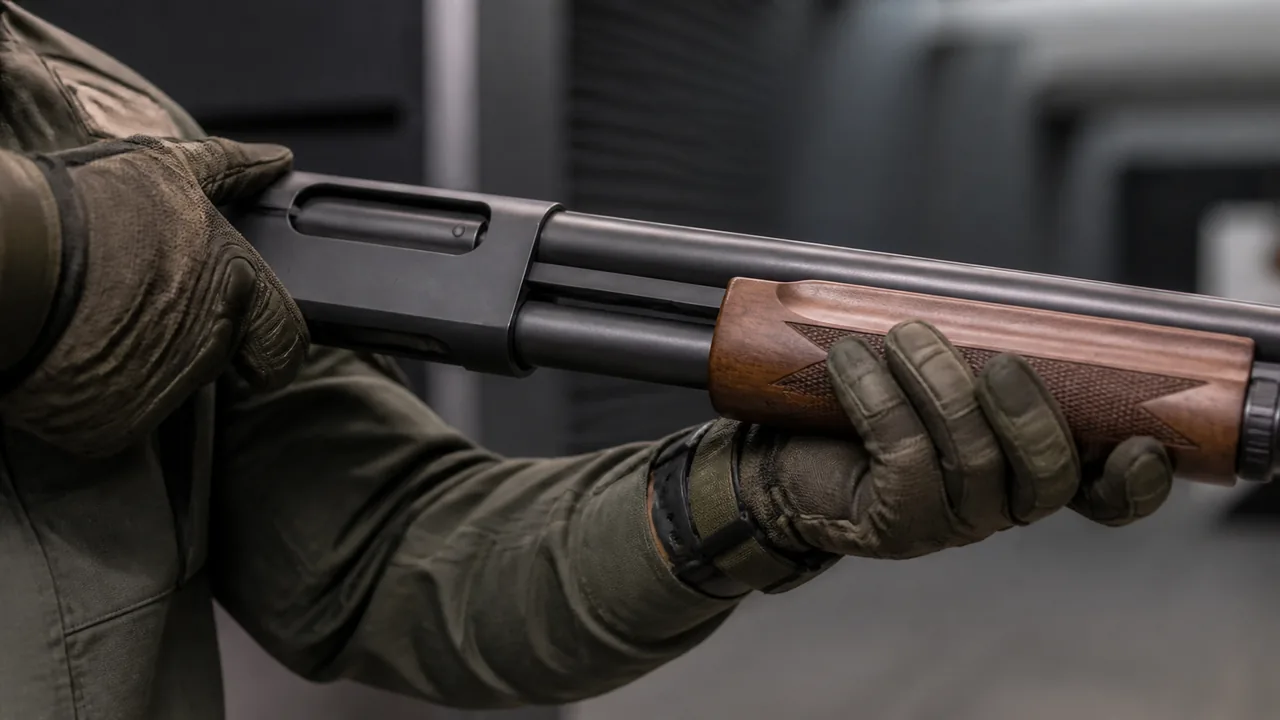
A pump-action shotgun is a type of firearm with a manual reloading system operated by a sliding fore-end. The shooter pulls the fore-end backward, opening the bolt and clearing the barrel. At the same time, a cartridge is fed from the magazine into the feed tube. Pushing the forend forward feeds the cartridge into the chamber and locks the bolt. At the same time, the firing mechanism is cocked, after which the firearm is ready to fire.
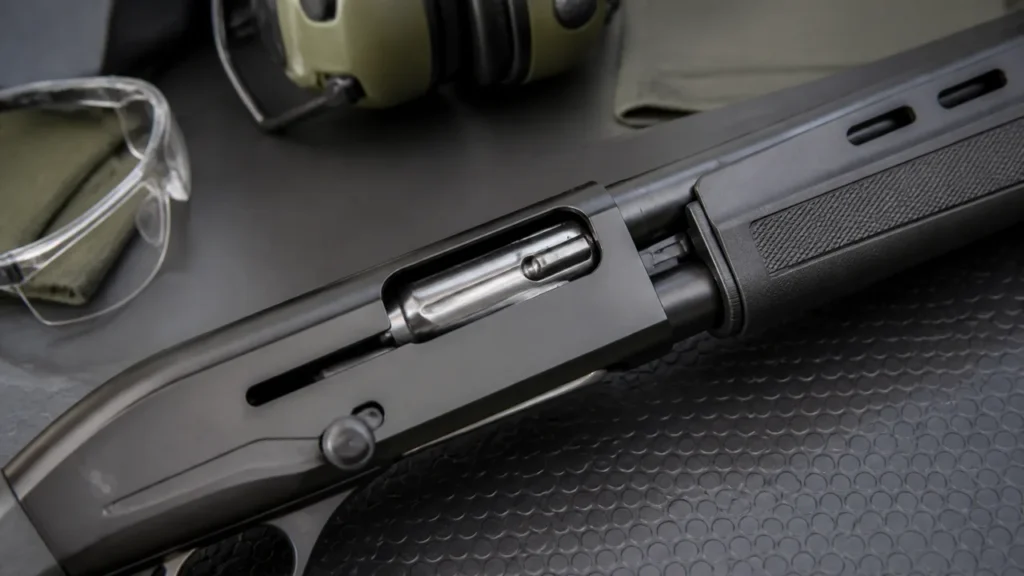
In a semi-automatic firearm, reloading is powered by the energy from the shot. As this happens, the bolt is pulled back, the spent cartridge case is ejected, and a new cartridge is fed into the chamber. To fire the next shot, you must pull the trigger again.
Pump-action shotgun: advantages and disadvantages
Pump-action shotguns feature a classic design characterized by simplicity, high reliability, and relatively low cost.
Key advantages of a pump-action shotgun
Among the main advantages of pump-action shotguns are:
High reliability even when operating in extreme conditions.
Fast first-shot speed, as this type of firearm is quicker and easier to prepare for combat. The shooter can load a new round into the chamber almost instantly, thanks to the very simple design.
A simple design with few moving parts, which minimizes the risk of malfunctions. If any parts wear out, pump-action shotguns are easy to repair. In addition, these shotguns are very easy to maintain. Basically, the owner needs to disassemble the receiver, remove the bolt, and clean the barrel bore, magazine, and moving parts.
Low cost compared to semi-automatic shotguns. Pump-action shotguns are 20–30% cheaper than semi-automatic shotguns in the same class.
Unpretentiousness regarding ammunition, allowing the shooter to use even inexpensive cartridges with a low load. This significantly reduces costs during frequent training sessions or hunting.
Manual reloading allows for complete control over both the rate of fire and the overall situation.
Pump-action shotguns are versatile and suitable for use in various fields—from sports to hunting.
The main disadvantages of pump-action shotguns
The disadvantages of pump-action shotguns include:
A low rate of fire compared to semi-automatic shotguns. This parameter directly depends on the shooter’s skill. After each shot, the forend must be manually pulled back and pushed forward to eject the spent shell and feed a new round. Experienced shooters can achieve a rate of about 1–1.5 shots per second. To achieve confident and rapid operation, regular practice at a shooting range is required.
As a rule, pump-action shotguns are heavier than semi-automatic ones.
For sustained firing, a pump-action shotgun is less convenient than a semi-automatic one.
Semi-automatic shotgun: advantages and disadvantages
Semi-automatic shotguns feature a more modern design that allows for rapid automatic reloading after each shot.
Key advantages of semi-automatic shotguns
Semi-automatic shotguns have several advantages over pump-action shotguns:
High rate of fire, since there is no need to manually reload the chamber after each shot. In other words, once the shooter pulls the trigger, the next round is already ready to fire. This is a good option when you need to fire a burst of shots while shifting fire between targets. On average, the rate of fire is about 3 rounds per second.
Relatively low recoil due to the absorption of the shot’s energy.
Comfort during prolonged firing, when it is important to focus on aiming rather than on the weapon’s operation.
Main Disadvantages of Semi-Automatic Shotguns
The main disadvantages of semi-automatic shotguns include:
High cost of both the firearm itself and maintenance, compared to pump-action models.
The design of semi-automatic shotguns is more complex, and therefore requires more maintenance.
Unlike pump-action shotguns, semi-automatic shotguns are much more selective about the quality of ammunition.
Greater weight due to the presence of additional components and mechanisms. Undoubtedly, this has a positive effect on recoil, but at the same time it can affect the shotgun’s balance.
Pump-Action or Semi-Automatic for Hunting
The choice between a pump-action and a semi-automatic shotgun for hunting depends not only on cost but also on the intended use of the firearm: small game and birds, or big game.
For hunting birds and moving targets
When hunting birds and small game, speed and the ability to fire a rapid series of shots—typically at moving targets—are crucial. That is why, in this case, a semi-automatic shotgun is the ideal choice.
For hunting large game
When it comes to large game—wild boars, moose, or other large animals—the reliability and versatility of the ammunition are important. The right choice is a high-quality pump-action shotgun.
A Pump-Action or Semi-Automatic Shotgun for Self-Defense
If you’re choosing a pump-action or semi-automatic shotgun for self-defense, you should consider the situation in which it will be used.
What Matters in a Stressful Situation
When choosing a weapon for self-defense, factors such as simplicity and reliability are crucial. That is why pump-action shotguns are well-suited for such purposes.
When it comes to tactical tasks, however, the choice—between a pump-action or a semi-automatic shotgun—depends on the specific situation. For example, if you need to act quickly and maintain a high rate of fire, it’s better to use a semi-automatic shotgun.
Which option is easier for regular training
Both pump-action and semi-automatic shotguns are suitable for regular training at a shooting club. Keep in mind that beginners are better off starting their training with a pump-action shotgun, as it is not only cheaper but also less finicky.
For dynamic shooting training, it’s best to use a semi-automatic.
Reliability, Maintenance, and Ammunition
When choosing between a pump-action shotgun and a semi-automatic, it’s important to evaluate not only shooting performance but also practical aspects of use. Any firearm requires the right choice of ammunition and regular maintenance, but the level of maintenance required can vary significantly between different models. Let’s examine how pump-action and semi-automatic shotguns perform with different cartridges and how complex their maintenance is.
Cartridge Compatibility
The choice of ammunition directly determines how reliably and effectively a firearm will function. Although pump-action and semi-automatic shotguns use the same cartridges, there is a significant difference in how well they handle different types.
As we have already noted, the main advantage of pump-action firearms is their flexibility regarding ammunition. The mechanical reloading system allows them to function reliably with different loads, regardless of their power. As for semi-automatic shotguns, they are much more demanding when it comes to ammunition. To ensure their reliable operation, you need cartridges with sufficient propellant charge. Using low-quality or undercharged ammunition will result in malfunctions or incomplete bolt travel. When purchasing cartridges for a semi-automatic rifle, it is very important to strictly follow the firearm manufacturer’s recommendations.
Weapon Maintenance and Cleaning
Thanks to its simple design, maintaining a pump-action firearm is very straightforward. For basic maintenance, it is sufficient to regularly disassemble the receiver, remove the bolt, and clean the barrel bore, as well as the magazine and the main moving parts. Reloading is based on a mechanical system, and the pump-action shotgun has no gas ports or inertia components that require particularly careful maintenance.
Maintenance and cleaning requirements for semi-automatic shotguns are more stringent. For models that rely on a gas-operated system, it is important to regularly clean the gas piston, cylinder, and gas ports of carbon deposits. If this is not done, delays in the automatic mechanism’s operation will eventually occur, leading to malfunctions. Inertia components are not as finicky as gas-operated channels, but their moving parts still require care and regular cleaning. Another factor to consider is that semi-automatic shotguns are sensitive to improper lubrication: too much can cause sticking, while too little will significantly accelerate wear on the mechanism.
Comparison Chart: Pump-Action Shotgun vs. Semi-Automatic Shotgun
We’ve prepared a comparison chart to help you better understand the differences between semi-automatic and pump-action shotguns, their specifications, and their applications.
Specifications
Pump-action shotguns
Semi-automatic shotguns
Rate of Fire
Relatively low. Requires practice with the forend
High, since semi-automatic weapons feature automatic reloading
Reliability
Can fire any type of ammunition, including inexpensive rounds
Performance depends directly on the quality of the ammunition
Maintenance
Simply requires simple, regular cleaning that takes very little time
Maintenance is more complicated due to its more complex design. Regular cleaning of all components is essential for proper operation
Cost
Relatively low
More expensive
Applications
Suitable for hunting large game, security, self-defense, and shooting range training
The best option for hunting small, moving game, for sport shooting, and for tactical missions
So, which firearm is better—a pump-action or a semi-automatic? It’s impossible to give a definitive answer to this question, since each of these types of firearms naturally has both advantages and disadvantages. This means that the choice of firearm depends directly on the shooter’s specific goals and objectives.
Before purchasing a pump-action or semi-automatic shotgun, we recommend practicing at a shooting range with experienced instructors who can explain the specifics of using each type. In addition, you’ll have the opportunity to personally assess the recoil and balance, how quickly you can reload, and how comfortable the gun is to shoot. It is through practice that you’ll be able to determine which firearm best suits your needs and objectives.
More on this topic
11.03.2026
What is a muzzle brake compensator
For comfortable shooting, there are special devices that reduce the noise of the shot, muzzle flash, barrel rise, and recoil. We are talking about the muzzle brake compensator, or MBC. It is easily attached to the muzzle of the barrel and simply removed, without the need for additional equipment.
F
17.03.2026
What is a cartridge caliber — table and applications
One of the key parameters when choosing a weapon is the cartridge caliber. This characteristic directly affects the ballistics of ammunition, shooting accuracy, recoil, and the scope of application of the combat unit.
In hunting, sport, and military practice, it is the choice of caliber that determ
30.04.2026
Top 10 Legal Weapons for Self-Defense
When it comes to self-defense, it's important to understand that it's not about aggression, but about your own safety. In today's world, where unpredictable situations can arise anywhere, many are forced to consider available ways to protect themselves and their loved ones. It's important to remembe
11.03.2026
What is a muzzle brake compensator
For comfortable shooting, there are special devices that reduce the noise of the shot, muzzle flash, barrel rise, and recoil. We are talking about the muzzle brake compensator, or MBC. It is easily attached to the muzzle of the barrel and simply removed, without the need for additional equipment.
F
17.03.2026
What is a cartridge caliber — table and applications
One of the key parameters when choosing a weapon is the cartridge caliber. This characteristic directly affects the ballistics of ammunition, shooting accuracy, recoil, and the scope of application of the combat unit.
In hunting, sport, and military practice, it is the choice of caliber that determ
30.04.2026
Top 10 Legal Weapons for Self-Defense
When it comes to self-defense, it's important to understand that it's not about aggression, but about your own safety. In today's world, where unpredictable situations can arise anywhere, many are forced to consider available ways to protect themselves and their loved ones. It's important to remembe
Darwin Shooting Club— we do not sell firearms
Our club does not sell or resell firearms. We exist to teach safe, conscious, and responsible handling of firearms.We conduct training sessions, safety briefings, and promote a culture of informed firearm ownership.