What a Carbine Is and How It Differs from a Rifle: Key Features and Purpose
22.10.2026Author: Charles Darwin
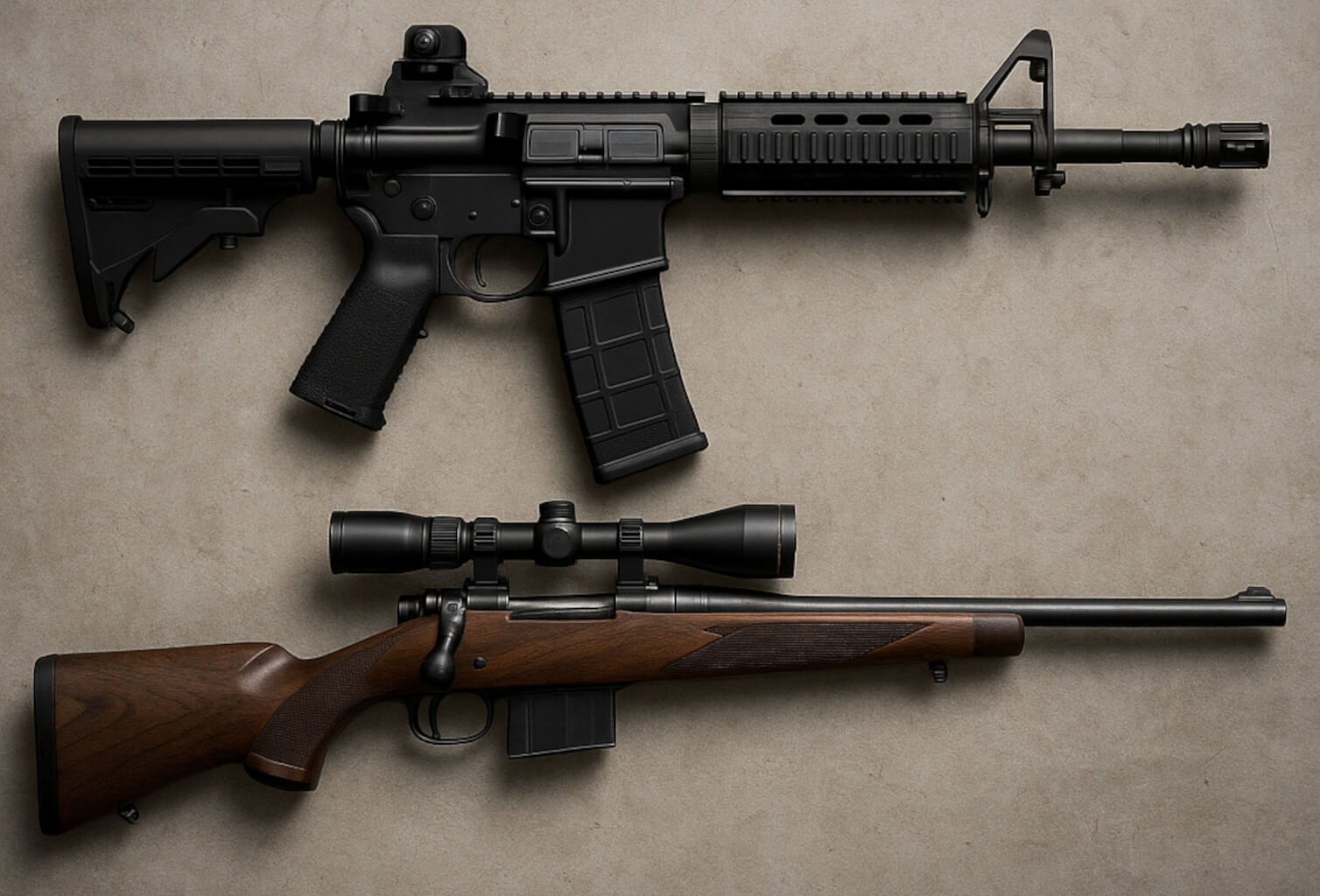
What are carbines and rifles? These are two types of firearms with distinct features and applications. Despite their similarities, they have several important differences. In this article, we’ll explain how a carbine differs from a rifle, explore their technical specifications, and discuss where each is used.
Definition and Main Features of a Carbine
A carbine is a type of firearm with a rifled barrel that is notably shorter than that of a rifle. Typically, the barrel length of a carbine is less than 500 mm, making it more compact and suitable for confined spaces. Thanks to its smaller size, a carbine is lighter and more maneuverable, which makes it popular among hunters, sport shooters, and military personnel.
Key features of a carbine:
Compact and lightweight — due to its short barrel and low weight, it’s convenient to use in tight spaces.
High accuracy — the rifled barrel ensures stable bullet trajectory and precise shots.
Various firing modes — carbines can feature manual, semi-automatic, or automatic reloading.
Availability of pneumatic models — some carbines use compressed air for shooting and are intended for sport or training use.
Definition and Key Features of a Rifle
A rifle is a long-barreled firearm with a rifled barrel designed for accurate shooting at long distances. Unlike a carbine, a rifle usually has a barrel length of over 500 mm, providing greater bullet velocity and stability over distance.
Key features of a rifle:
Long barrel — ensures high accuracy and shooting range.
Powerful cartridges — enable striking targets at considerable distances.
Various firing modes — from manual to automatic.
Optical sights — often used to enhance shooting precision.
Wide application — rifles are used in the military, hunting, and sport shooting.
Technical Comparison of Carbines and Rifles: Key Parameters
Parameter
Carbine
Rifle
Barrel length
Usually up to 500 mm
Usually more than 500 mm
Overall length
Short, compact
Long
Weight
Light
Heavier
Ammunition type
Light and medium cartridges
Medium and heavy cartridges
Effective shooting range
Up to 300–400 m
Up to 600–1000 m and more
Purpose
Maneuverability, close combat, hunting
Long-range shooting, sniper work
Automatic fire capability
Available in some models
Usually semi-automatic or manual
The length and design of a carbine make it well-suited for shooting in confined areas, such as forests or urban environments. Rifles are designed for precise long-range shooting due to their longer barrels and more powerful ammunition. Carbines typically use smaller caliber rounds for medium-range use, while rifles use more powerful rounds for long-distance accuracy.
Differences in Practical Applications
The difference between a carbine and a rifle becomes especially clear in practical scenarios. Each firearm has its advantages depending on the situation.
Key areas of application include:
Hunting and sport
Military and tactical use
Hunting and Sport
Carbines are popular among hunters, especially when hunting in dense forests, where compact size and maneuverability are more important than range. Their light weight makes them convenient for extended use and quick reaction.
Rifles, in contrast, are used for hunting larger animals at greater distances, where accuracy and stopping power are crucial. Competitive shooters often choose rifles for long-range target shooting.
Military and Tactical Use
In the military and special units, carbines are used as versatile weapons for close and mid-range combat. Their compact size makes it easier to move and engage targets in indoor or rugged terrain.
Rifles are more commonly used by snipers and special forces for precise long-distance shots. These are precision weapons requiring maximum accuracy and range.
If you want to gain firearm handling skills, we recommend visiting the Darwin Club shooting range, where courses are available for both beginners and professionals.
History of Carbines and Rifles
The history of these firearms spans several centuries, illustrating how technological advances have shaped their design and purpose.
Origins and early examples of carbines Carbines first appeared in the 17th–18th centuries as shortened versions of muskets, intended for cavalry use. Their compact size made them easier to handle on horseback.
Evolution of rifles: from muskets to modern models Rifles evolved alongside carbines, becoming more accurate and powerful thanks to rifled barrels and modern reloading mechanisms.
Impact of technological innovation Modern materials, optical sights, and automatic mechanisms have significantly expanded the capabilities of both carbines and rifles.
Popular Carbine and Rifle Models on the Market
The market offers a wide variety of models that differ in design, purpose, and technical characteristics.
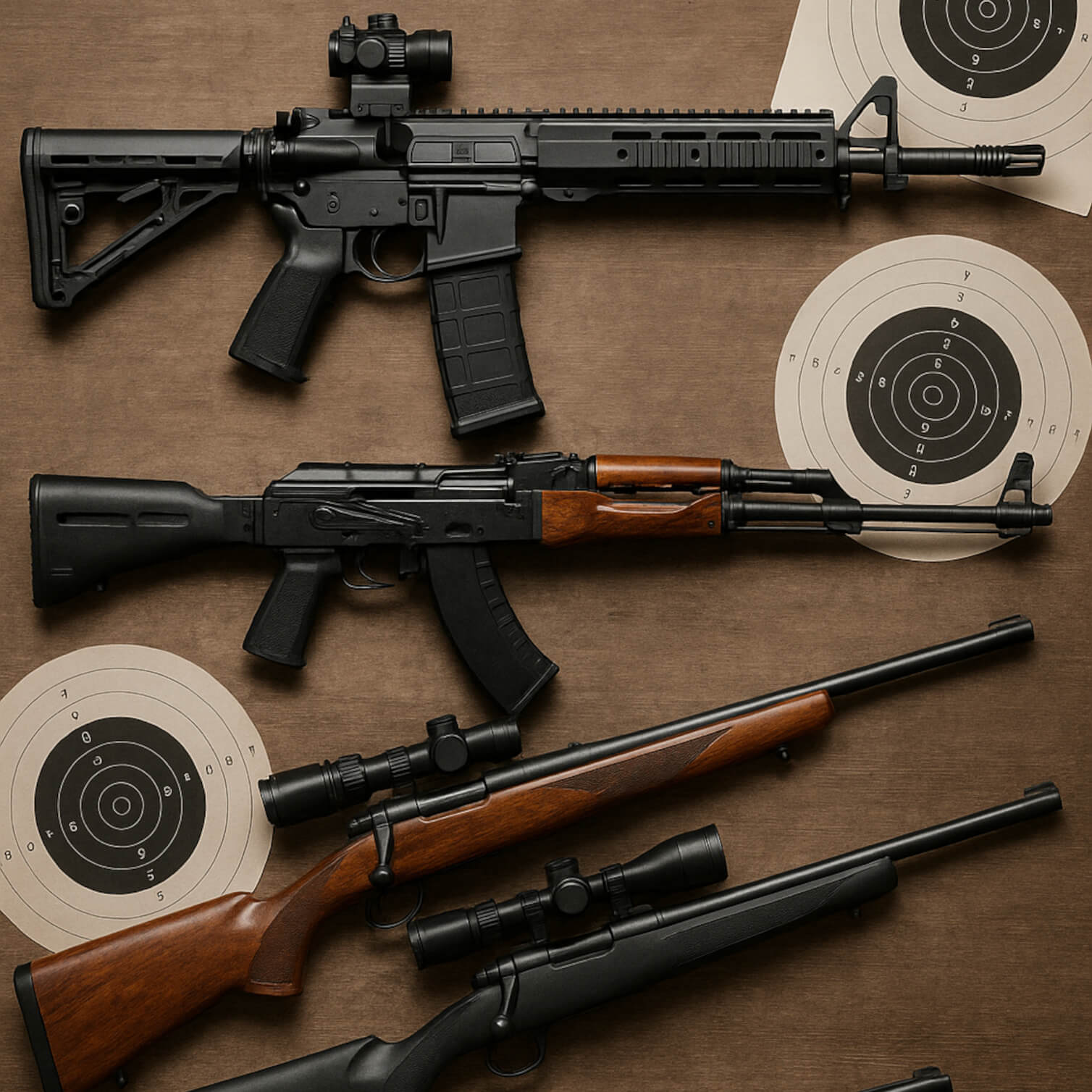
Popular carbine models:
AR-15
Saiga
CZ Scorpion
These carbines are known for their reliability and versatility.
Popular rifle models:
Mosin Rifle
Remington 700
Sniper rifles by Accuracy International
These rifles are renowned for their accuracy and effectiveness at long range.
For professional training and practice, you can sign up for shooting courses in Kyiv, where experienced instructors teach the use of various firearms.
Conclusion
The difference between a carbine and a rifle lies not only in barrel length and construction but also in purpose, application, and technical characteristics. A carbine is a more compact, maneuverable weapon for close-range use and hunting in tight spaces. A rifle is intended for accurate long-range shooting and offers greater power.
Understanding these differences is essential for choosing the right firearm for your needs—whether for sport, hunting, or service. If you want to gain professional skills in handling firearms and explore various types, we recommend checking out the Darwin Club training programs.
More on this topic
13.08.2025
How to transport weapons by car: rules and fines
Transportation of weapons is a responsible process that is regulated by certain legislative requirements. Minimal violations are fraught with fines and other unpleasant legal consequences.
When transporting weapons by car, we recommend that owners familiarize themselves with this material in advanc
13.08.2025
How to choose your first shotgun for self-defense or sport
Smoothbore weapons are a popular type of civilian weapons in Ukraine. They are used to practice marksmanship, in competitions, hunting, and for self-defense. However, it is quite difficult for beginners to choose a good model according to their goals. The slightest nuances can negatively affect how
05.05.2025
Types of Non-Lethal Weapons: Classification and Purpose
Non-lethal weapons are used for self-defense. They are designed to temporarily neutralize an opponent without causing fatal injuries, making them popular among civilians and law enforcement agencies. The easiest way to learn how to handle non-lethal weapons is in a shooting range, with the support o
13.08.2025
How to transport weapons by car: rules and fines
Transportation of weapons is a responsible process that is regulated by certain legislative requirements. Minimal violations are fraught with fines and other unpleasant legal consequences.
When transporting weapons by car, we recommend that owners familiarize themselves with this material in advanc
13.08.2025
How to choose your first shotgun for self-defense or sport
Smoothbore weapons are a popular type of civilian weapons in Ukraine. They are used to practice marksmanship, in competitions, hunting, and for self-defense. However, it is quite difficult for beginners to choose a good model according to their goals. The slightest nuances can negatively affect how
05.05.2025
Types of Non-Lethal Weapons: Classification and Purpose
Non-lethal weapons are used for self-defense. They are designed to temporarily neutralize an opponent without causing fatal injuries, making them popular among civilians and law enforcement agencies. The easiest way to learn how to handle non-lethal weapons is in a shooting range, with the support o
Darwin Shooting Club— we do not sell firearms
Our club does not sell or resell firearms. We exist to teach safe, conscious, and responsible handling of firearms.We conduct training sessions, safety briefings, and promote a culture of informed firearm ownership.