How to properly clean rifle rifle after shooting
Cleaning a gun is a fundamental procedure for maintaining its smooth operation and longevity. Regardless of its intended use—hunting, sport, or self-defense—proper cleaning helps prevent a variety of problems, including corrosion, jamming during shooting, and decreased accuracy.
In this article, we'll discuss how to properly clean a rifled carbine, what products to use, and how to properly store rifled weapons.
Problems with Inadequate Gun Care
First, let's look at the problems that can arise if rifled weapons are not properly maintained. The main cause of malfunction is the accumulation of dirt on the barrel, which inevitably occurs after each shooting.
As a rule, this refers to:
- Gunpowder residue formed due to its combustion during firing. Soot and non-combustible particles settle on the barrel walls and cause bullet movement problems due to friction and uneven handling.
- Lead and copper deposits, when bullets leave small metal particles on the walls as they move. Without regular cleaning, over time a dense layer forms on the walls, which will directly affect the ballistic performance of a rifled weapon due to rifling deformation.
- Dust and sand entering the barrel and mechanisms, especially when used on nature. Small particles act as an abrasive, causing damage and wear to metal parts.
- Residues of oil used to treat guns to protect them from corrosion. These professional products partially burn off during firing, leaving a film on the inner surface of the barrel. This film combines with other contaminants and complicates cleaning.
Deposits accumulate and, taken together, directly affect rifled weapons, increasing the risk of injury to the shooter. Therefore, regular and proper cleaning of the gun after firing is a mandatory procedure that should not be neglected.
Essential Tools for Cleaning a Rifled Barrel
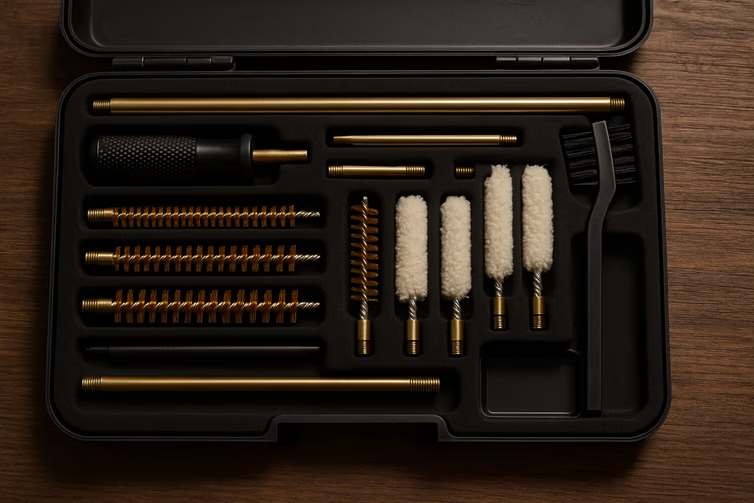
Cleaning a rifled gun after shooting requires more than just wiping it down. To properly care for the barrel, you'll need professional tools and products. We'll discuss these in detail below.
So, there's a so-called basic tool kit, consisting of:
- cleaning rods,
- brushes,
- patches,
- chamber guides.
The cleaning rod's function is to hold the brushes or visors running along the bore. The best choice is a one-piece carbon fiber cleaning rod equipped with a bearing. These models have no joints that can damage the barrel. Furthermore, the bearing allows the brushes and patches to rotate with the rifling, preventing damage to the surface.
The purpose of brushes is to remove dirt. These accessories are made of various materials, but the best choice is brass or bronze brushes, which effectively remove carbon and deposits without damaging the barrel.
Vishers hold cleaning patches, which are designed to apply cleaning agents, dissolve carbon deposits, and polish the barrel. It is important that the patches are lint-free.
As for the guides, they are inserted into the chamber and protect the receiver from dirt and cleaning agents. Furthermore, the guides center the receiver. Cleaning rods and help prevent damage to the rifling.
Cleaning agents include specialized chemicals that are divided into three groups based on their function:
- Products for dissolving gunpowder combustion products.
- Products for removing copper deposits from the barrel.
- Universal products that remove both carbon deposits and copper. The best option for regular basic gun cleanings when contamination is minimal.
Important to know! Never use household chemicals to clean rifled weapons. They will not remove contamination, but they can damage the barrel coating.
Additionally, specialists gunsmiths recommend using a special stand (verstat) to secure the weapon, pipettes to use cleaning chemicals sparingly, and protective mats to prevent stains. These accessories make the gun cleaning process more comfortable, which is very important for those who use their guns regularly.
How to Clean a Rifled Gun: A Step-by-Step Guide
The basic rule for high-quality barrel maintenance is to consistently and correctly complete all cleaning steps.
Step-by-Step Procedure for Cleaning a Rifled Gun:
- Unload and disassemble the gun. Remove the magazine, remove the cartridges from the chamber, and ensure the gun is completely unloaded.
- Coat the bore with alkaline lubricant and leave for 10-15 minutes (but no more). This is a primary cleaning to neutralize acidic residues. Remove lubricant and carbon deposits with clean, dry patches, repeating several times if necessary until the patch comes out clean.
- Carry out mechanical cleaning with a bore brush. It is important to move the brush along the bore correctly—in one motion from the breech to the muzzle. The number of such motions is about 10–12. Next, take a dry patch, wrap it around a visher, soak it in a mild alkaline solution, and wipe again. Then, wipe the barrel dry with the patches. This step should be repeated until the patches no longer come out dirty and become lighter. At this stage, all coarse carbon deposits and copper plating are removed from the barrel.
- Proceed to cleaning the barrel with neutral oil. Repeat the procedure until the patches come out almost clean. Finally, it is important to wipe the barrel with dry patches.
- Next, proceed to cleaning and lubricating the other parts of the gun. First, disassemble the bolt, apply a carbon remover to its parts, and remove all dirt with a rag and brush. Next, apply neutral oil to all areas where cleaning took place. Afterward, reassemble the bolt and test its operation.
- For owners of semi-automatic shotguns and carbines, it is also important to clean the gas mechanism with a carbon remover. After cleaning, the mechanism is wiped with a dry cloth and lightly oiled. The receiver is treated in the same manner, and the bolt carrier, receiver cover, and other parts of the weapon that came into contact with combustion products are cleaned and oiled.
- The final stage of cleaning is preserving the weapon. To do this, use a patch soaked in neutral oil. Pass the patch through the barrel, leaving a thin layer of oil. The main components of the weapon are treated in the same way. It is important to keep the oil layer minimal. Store the weapon in a safe with the muzzle down and covered with a dry patch. This will prevent dust from getting in.
Storage Rules
Proper weapon storage is the key to extending its trouble-free lifespan.
To ensure your rifle always remains in good working order, follow these recommendations:
- Clean and lubricate it regularly to protect it from rust;
- Choose a dry, moisture- and sun-protected storage location—a cabinet or safe;
- Make it a rule to regularly inspect the condition of all parts of your weapon;
- Use only high-quality ammunition and observe safety rules when shooting;
- Transport it in a special case or carrying case;
- Periodic maintenance at a professional rifle shop.
Mistakes to Avoid
Not only beginners, but even experienced shooters sometimes make mistakes when cleaning guns, namely:
- Choosing the wrong tools, such as steel brushes or abrasives. This leads to damage to the barrel surface and rifling.
- Chemical residue in the barrel. If the chemicals are not completely removed, they will continue to act after cleaning, thereby damaging the metal. The barrel should be treated with a neutral oil and wiped dry.
- Using too much oil. This should not be done, as oil residue will attract dust, promote the retention of carbon and gunpowder, thereby interfering with the operation of components.
- Using household chemicals and solvents. Cleaning with household chemicals results in damage to parts and metal corrosion.
- Incorrect cleaning direction. The cleaning rod is drawn from the chamber to the muzzle and not the other way around.
- Irregular cleaning of the gun after shooting. In this case, carbon deposits and copper deposits will quickly soak into the metal and lead to a sharp reduction in the barrel's lifespan. Even with infrequent use, this procedure should be performed 1-2 times a month.
Regular cleaning and maintenance are essential for all rifle owners. If you plan to do it yourself, set yourself up to view it not as a chore, but as a useful and necessary ritual. If you're unsure of your experience, you can always entrust this important task to specialists at a shooting workshop.
Contacts
- MN - FR
- 10:00 - 21:00
- ST - SU
- 10:00 - 22:00
- E-mail